
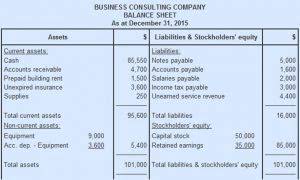
Construction-in-Progress (CIP) accounting plays a vital role in ensuring that costs are accurately tracked and financial statements reflect the true state of Accounting for Churches ongoing projects. Construction in progress is reported on the balance sheet as a separate line item, usually under the category of property, plant, and equipment. It represents the accumulated costs of ongoing construction projects that are not yet completed.
Why is Construction-in-Progress (CIP) Accounting Mandatory?
- The income statement is also impacted by CIP, particularly through the timing of expense recognition.
- Each of these methods has its own set of advantages and is chosen based on the nature of the project and the reliability of the measurement criteria.
- Construction-in-progress accounting is used to track the progress of projects still in construction.
- Once expenses are recorded, they need to be allocated to the appropriate asset account.
- CIP accounting in construction presents unique challenges, but effective strategies can ensure accurate financial reporting.
Business A utilizes $2,000 worth of materials from its inventory for the expansion. Business A receives a $100,000 bill from Builder’s Warehouse for construction materials. 1) On March 11, 2021, Business A received a $100,000 bill from Builder’s Warehouse for construction materials. Zippia allows you to choose from different easy-to-use templates, and provides you with expert advice. Using the templates, you can rest assured that the structure and format of your resume is top notch. Choose a template with the colors, fonts cip accounting & text sizes that are appropriate for your industry.

Effective Cost Control and Budgeting

Managing construction-work-in-progress accounts presents unique challenges, necessitating specialized expertise and training. Given the complexities involved, many businesses opt to enlist the services of a chief financial officer (CFO) to oversee these records. By doing so, they mitigate the risk of costly accounting errors and ensure compliance with regulatory standards.
- When the project is complete, transfer the CIP balance to a fixed asset account like “Buildings.” This signifies the asset’s transition to operational use, and depreciation begins.
- It helps evaluate the capital expenditure, profitability, and overall financial health of the business.
- This guide will break down its meaning, importance, and practical applications while addressing common challenges and solutions.
- The company incurs costs for salaries of programmers, software licenses, development tools, and other expenses related to the project.
- Accountants do not begin tracking depreciation of construction-in-progress assets until the addition is complete and in service.
Establishing CIP Accounts:

In this article, we will delve into the world of CIP accounting, exploring its definition, benefits, and importance. CIP plays a vital role in financial forecasting by providing insights into ongoing construction costs. It allows organizations to make informed projections regarding future expenditures, cash flows, and potential returns on capital once the projects are completed.

Once the building is completed and put into service, the costs recorded as CIP are transferred to the “Property, Plant, and Equipment” account. From that point forward, the building will be subject to depreciation over its useful life. The CIP account usually contains information for multiple fixed assets under construction. The CIP account, therefore, accumulates costs for a fixed asset until it is ready for use. CIP accounting ensures that expenses are recorded in the period they Online Accounting occur, providing a clear picture of financial health.
- While both CIP and WIP (Work in Progress) accounting deal with ongoing projects, they serve different purposes.
- This step helps with financial reporting, updating how these costs are perceived and managed.
- Submit your email, and our team will reach out to discuss how we can help with tailored financial solutions.
- Tools like Procore, Sage 300 Construction and Real Estate, and Viewpoint Vista offer robust features tailored to the unique needs of construction projects.
- When costs are incurred during the construction or development phase of a project, they are initially recorded as CIP on the balance sheet.
- In accounting, this acronym has a different connotation, specifically in the context of Construction in Place.
Challenges of CIP Accounting
Through construction-in-progress accounting, also known as CIP accounting, one can keep track of all expenditures involved throughout a construction project. For expert guidance on CIP accounting or construction financial management, contact PVM Accounting today! Upon project completion, the CIP account is transitioned to the appropriate fixed-asset account. One thing to understand is that only capital costs related to an asset under construction are to be kept in the CIP account. The operating costs related to a specific period must be charged to the same accounting period.
0 Comments